TYPES
Bevel-edge for most jobs
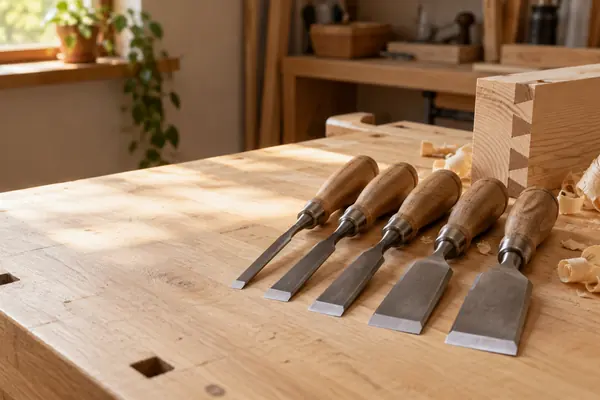
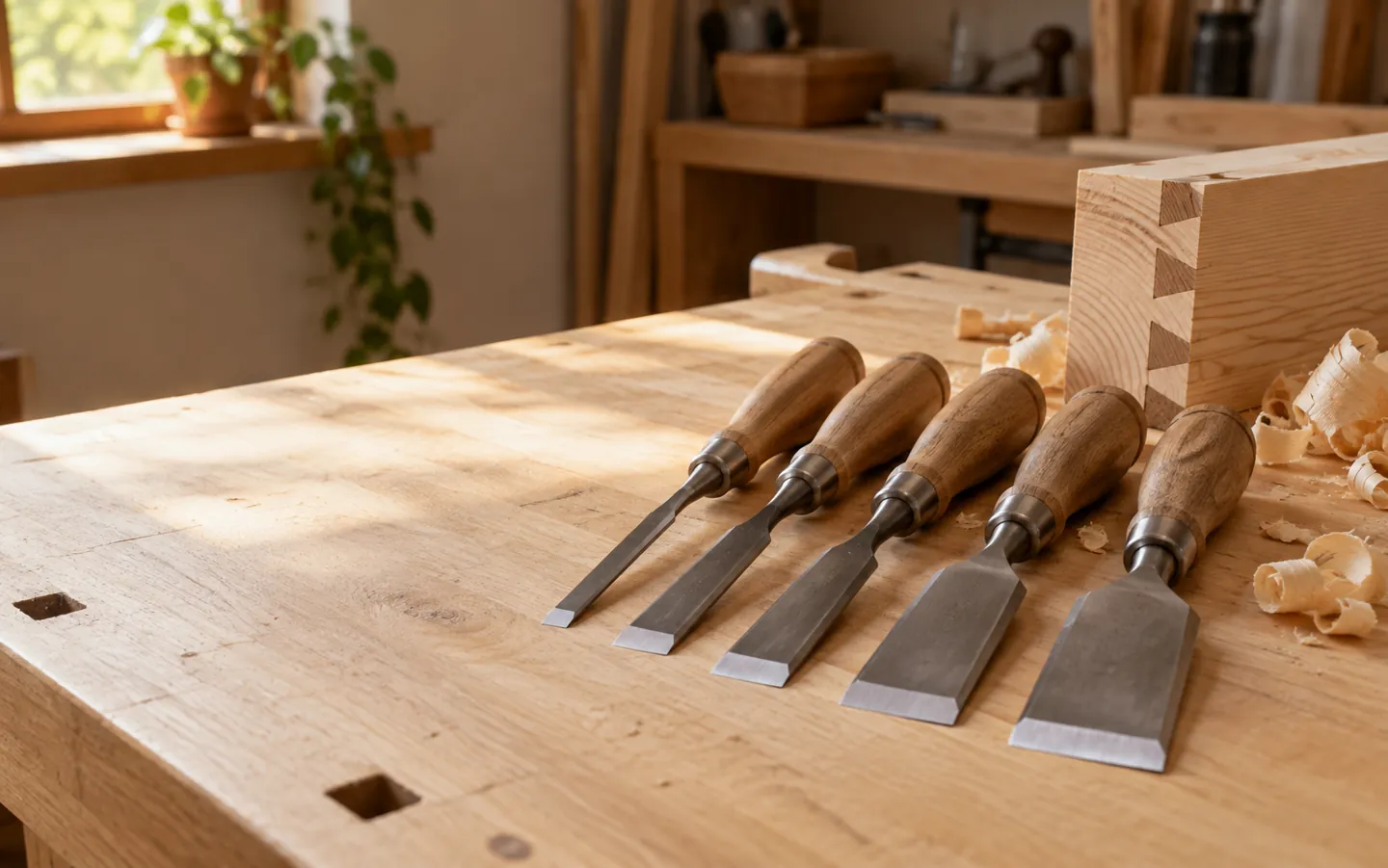
Its long edges are angled so it reaches into tight corners such as dovetails. It is not meant for heavy chopping; firmer and mortise chisels have thicker blades for that.
Match a job to an angle doodlechisel
A BEGINNER'S GUIDE
A chisel is a simple tool with a sharp edge.
KEEP IT KEEN a dull chisel slips
64% Woodworkers reporting a tool injury
Most beginner trouble comes from three things: the wrong chisel for the job, an edge that has gone dull, and a hand in front of the blade. Workshop safety guidance and woodworking references agree on the fixes.
THE SHORT ANSWER
Chisels differ mainly in blade thickness.
Thin blades slice, thick blades take a mallet.
TYPES
Its long edges are angled so it reaches into tight corners such as dovetails. It is not meant for heavy chopping; firmer and mortise chisels have thicker blades for that.
Match a job to an angleSHARPENING
Safety guidance says dull chisels need more force and can be more dangerous. Woodworkers commonly grind a 25 degree bevel and hone a small 30 degree micro bevel at the tip.
How to sharpenSAFE USE
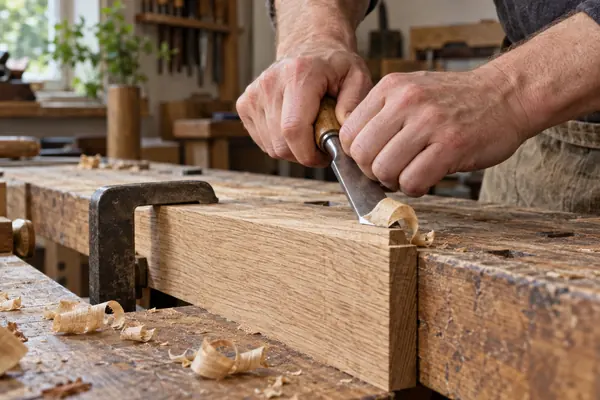
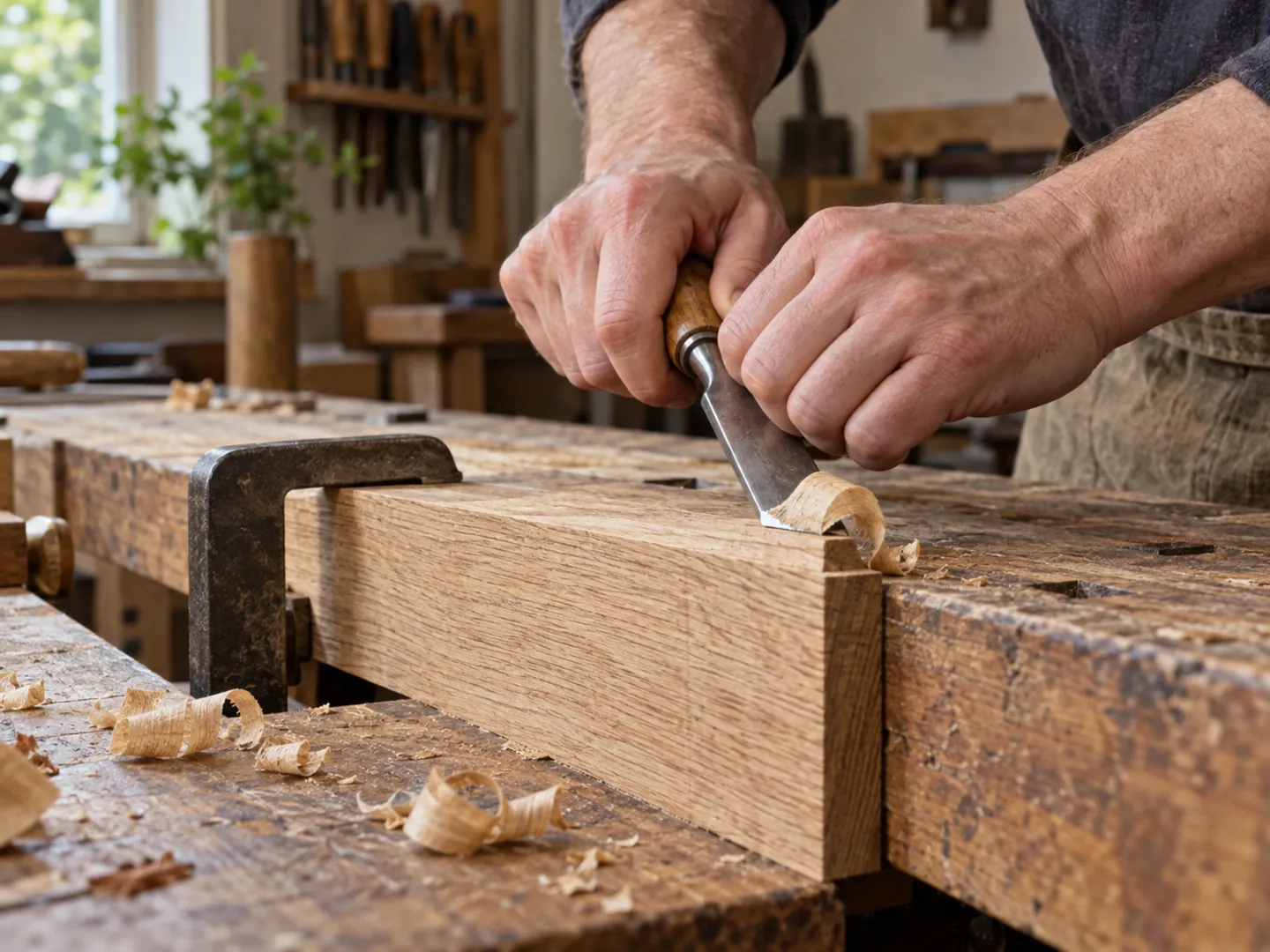
Clamp the wood so it cannot move, point the blade away from you and keep both hands behind the cutting edge. Never hold the work in one hand and chisel with the other.
Why it mattersA QUICK ANGLE CHECK
Pick a job to see the bevel angle woodworking references suggest. Lower angles slice more easily but dull sooner; steeper angles last longer under a mallet. The bar shows how steep the edge is.
Angles from American Woodworker via Popular Woodworking and the Journal of Light Construction. Follow your chisel maker's guidance where it differs.
SHARPENING IN FOUR STEPS
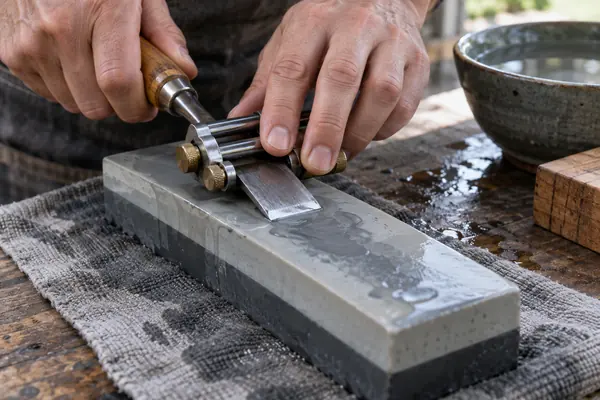
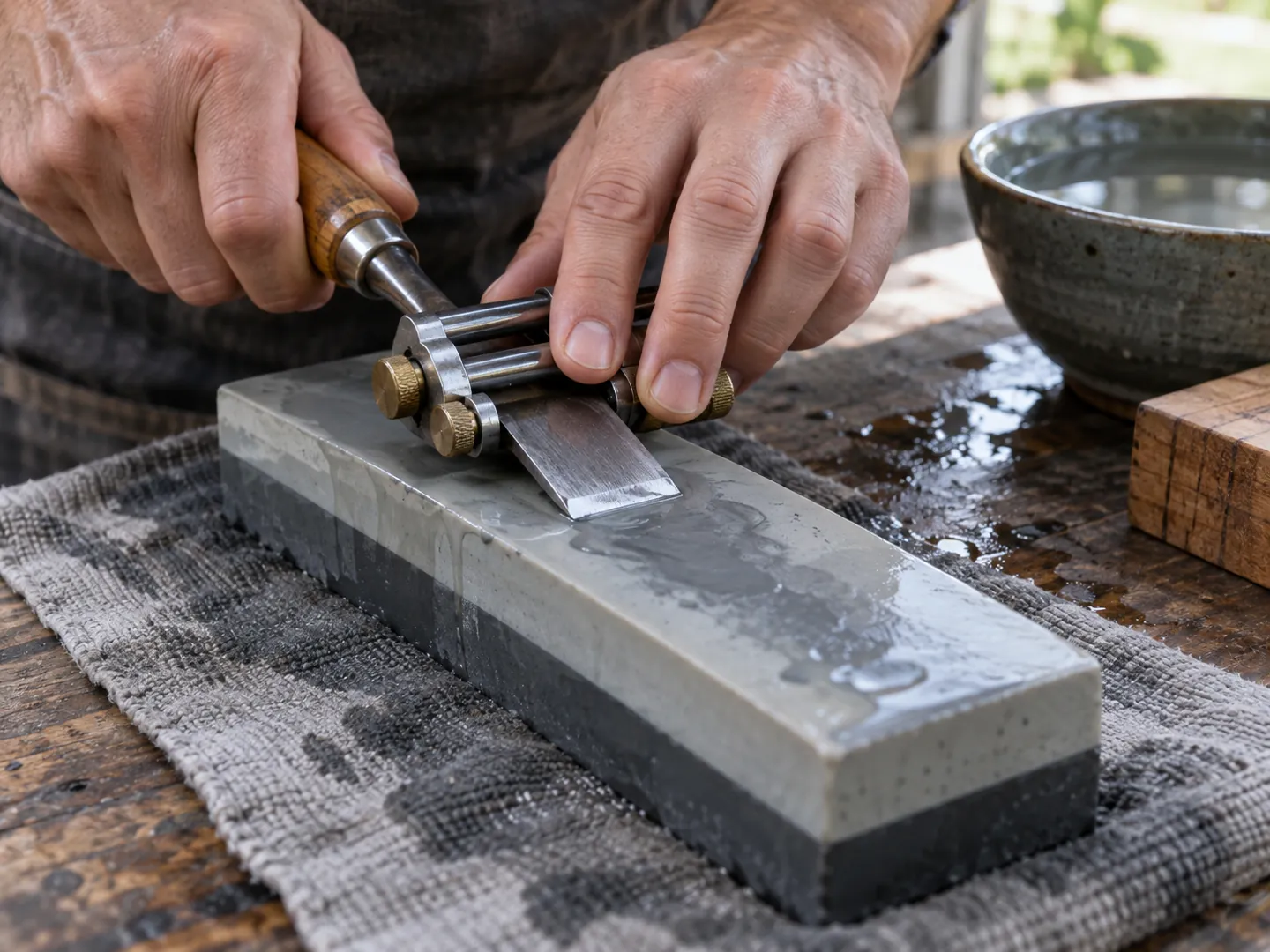
A combination water stone with a 1,000 grit side and a 4,000 grit side, plus a honing guide, is enough to start. Keep the stone wet throughout.
Soak the water stone for 10 to 15 minutes, then set it on a damp cloth so it cannot slide.
Rub the flat back of the chisel across the stone to remove burrs, wiping away the metal fines as you go.
If the chisel is very dull, work the whole bevel at 25 degrees on the 1,000 grit side, using the honing guide to hold the angle.
Turn to the 4,000 grit side, reset the guide to 30 degrees and polish just the leading edge of the tip.
TWO NUMBERS WORTH KNOWING
One figure on how often woodworkers get hurt,
one on the angles chisels are sharpened to.
64%
Woodworkers reporting a tool injury
In a survey of 283 amateur and professional woodworkers, 64 percent reported injuries from woodshop tools and a third needed medical attention. Hammers, chisels and gouges, and table saws were the tools most often named.
INJURIES · JOEM 1996
20–30°
Typical wood chisel bevel
Woodworking chisel bevels range from 20 to 30 degrees, with 25 degrees the most common, according to the Journal of Light Construction.
BEVEL ANGLES · JLC
Louisiana State University's safety manual says chisels that are bent, cracked or chipped should be discarded. Canada's safety center, CCOHS, adds: don't use a bench grinder on heat-treated tools; use a whetstone instead.
MALLETS AND STORAGE
Use a wooden or plastic mallet with a large face on wood chisels; only heavy-duty or framing chisels are made to take a steel hammer. Never use a wood chisel as a pry bar or on metal, and check the wood for nails and screws first.
On the bench, rest chisels bevel side up. When you are done, fit plastic caps over the edges and keep them in a roll with a slot for each chisel, so nobody reaches into a drawer of bare blades.
Questions
A bevel-edge chisel is the everyday type: its angled sides let it reach tight corners such as dovetails. It is not designed for heavy chopping, which is the job of thicker firmer and mortise chisels.
Bevels typically range from 20 to 30 degrees, with 25 most common. American Woodworker's editors suggest 25 degrees for paring chisels, 30 for general bench chisels and about 35 for mortise chisels.
A Mississippi State University safety newsletter says dull tools take more hand pressure and can be more dangerous than sharp ones. Fine Woodworking calls keeping chisels sharp the number one safety rule.
Only heavy-duty or framing chisels with solid handles are made to be struck with a steel hammer. For other wood chisels, use a wooden or plastic mallet with a large striking face.
Yes, when chips can fly. OSHA's eye protection rule covers hazards from flying particles, and the University of Georgia's tool safety guide says to wear goggles against flying debris or sawdust.
Updated
ABOUT THIS NAME
doodlechisel.com is part of the DoodleSale portfolio. It isn't in an auction right now, but you can ask about leasing it.